Mudras

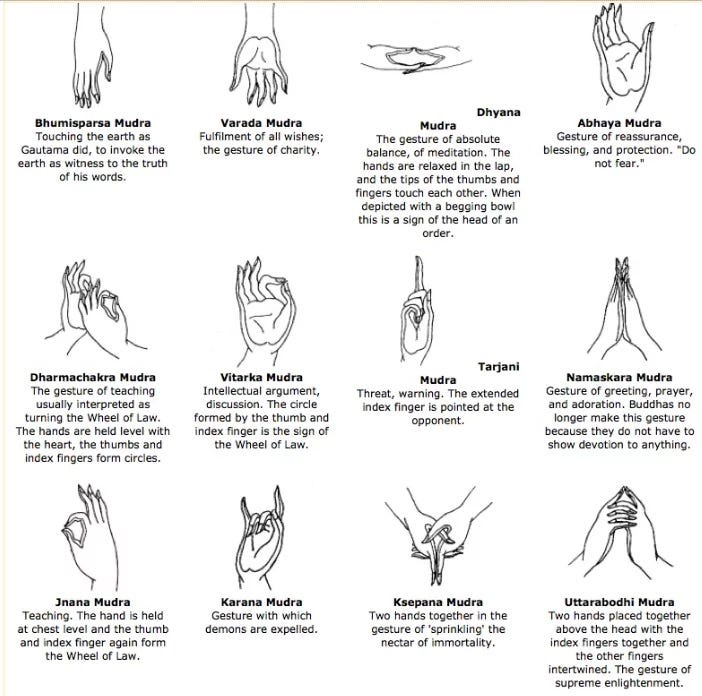
A mudra is a symbolic, ritual hand gesture or pose used in Tibetan Buddhist meditation, art, and tantric practice. Derived from the Sanskrit word for "seal" or "mark" (known as chakgya in Tibetan), these gestures physically channel energy, aid concentration, and embody specific states of mind or the qualities of enlightened deities.
Mudras serve several distinct purposes within the tradition:
Iconography and Deities: Depicted in statues and thangka paintings, mudras help practitioners instantly identify specific Buddhas or Bodhisattvas (e.g., the Dhyana meditation gesture or Abhayagesture of fearlessness).
Meditation and Rituals: Practitioners hold specific gestures to focus their mind, involve their physical body in mental pursuits, and mentally "seal" an intention or invocation during chanting and visualization practices.
Offerings: Complex mudras are often used in dynamic movements, such as the Mandala Offering, which physically shapes the hands to offer the entire universe to the enlightened beings.
Tantra (Vajrayana): During deep esoteric practice, specific hand mudras are used alongside ritual instruments like the vajra (symbolizing method) and bell (symbolizing wisdom) to generate spiritual connections.
@Jack Lhasa @Charles Minguez