Nagarjuna

In Tibetan Buddhism, Nagarjuna (circa 150–250 CE) is revered as the "Second Buddha". This 2nd-century Indian scholar is considered the most important Buddhist philosopher after Gautama Buddha himself. He is the foundational architect of Mahayana philosophy and the founder of the Madhyamaka ("Middle Way") school.
Nagarjuna's profound influence on Tibetan Buddhism is characterized by several key roles:
The Founder of Emptiness (Śūnyatā): Nagarjuna is best known for articulating the concept of emptiness, which explains that all things and phenomena lack inherent, independent existence. Instead, everything exists dependently on other things, a concept known as dependent co-arising.
The "Second Buddha": Because of his genius in clarifying the most complex and profound teachings of the Buddha, Tibetan Buddhists respectfully grant him the title of "Second Buddha". He is also counted among the "Six Ornaments" of India—the six greatest commentators on the Buddha's teachings.
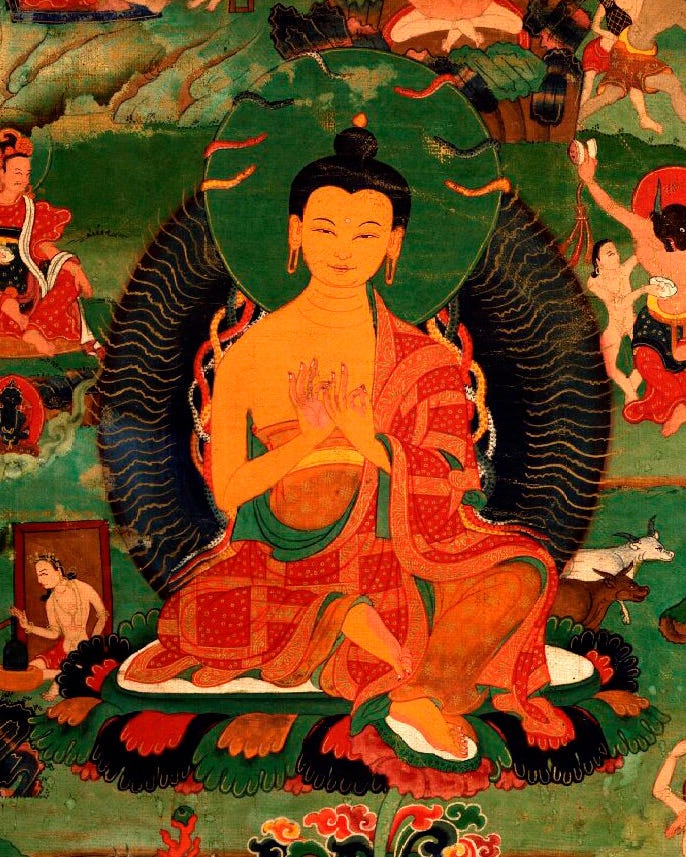
The Recovery of the Wisdom Sutras: According to Tibetan tradition, Nagarjuna traveled to the realm of the nagas (serpent deities) to retrieve the Prajñāpāramitā Sūtras (Perfection of Wisdom Sutras), which had been hidden by the Buddha for safekeeping until humanity was ready to understand them.
Central Figure in Monastic Education: His masterpiece text, the Mūlamadhyamakakārikā (Root Verses on the Middle Way), and the commentaries by his student Chandrakirti form the absolute core of philosophical study in Tibetan monastic universities. The Gelug school, founded by Lama Tsongkhapa, relies heavily on Nagarjuna’s logical approach to dismantle all rigid dogmas and conceptual attachments.
Iconography: In Tibetan art, he is often depicted with a halo and a canopy of nagas (cobras or serpent heads) protecting him, along with a scroll or book representing his teachings.
@Jack Lhasa @Charles Minguez