The Four Seals

The Four Seals (Tib. dom shyi, Wyl. sdom bzhi) are the fundamental philosophical tenets that define an authentic teaching of the Buddha. They are used to differentiate Buddhism from other belief systems and summarize the core view of the path to liberation.
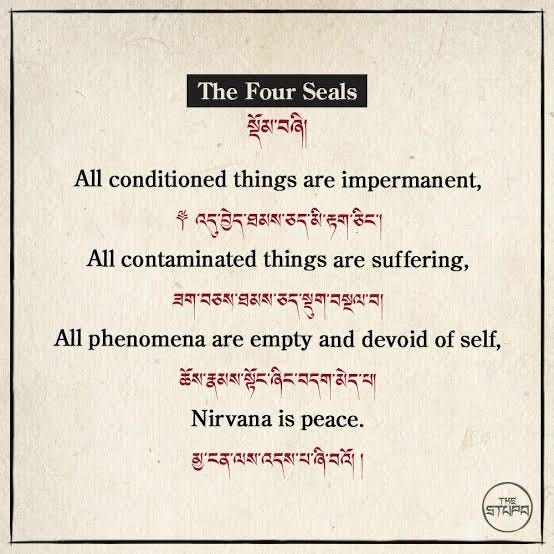
The four seals are:
All compounded phenomena are impermanent. (Tib: འདུས་བྱས་ཐམས་ཅད་མི་རྟག་པ་, dü jé tam ché mi tak pa). Everything created or assembled—all physical objects, emotions, and mental states—is temporary, constantly changing, and will eventually pass away.
All contaminated things are suffering. (Tib: ཟག་བཅས་ཐམས་ཅད་སྡུག་བསྔལ་བ་, zak ché tam ché duk ngal wa). "Contaminated" refers to phenomena produced by karma and kleshas (disturbing emotions). Because these things are subject to change and craving, they are inherently unsatisfactory or painful in nature.
All phenomena are empty and selfless. (Tib: ཆོས་ཐམས་ཅད་སྟོང་ཞིང་བདག་མེད་པ་, chö tam ché tong zhing dak mé pa). Nothing exists independently, solidly, or permanently on its own (no self-existence). This seal highlights the concept of voidness or non-self, which is the ultimate view of Buddhism.
Nirvana is true peace. (Tib: མྱང་འདས་ཞི་བ་, nyang dé zhi wa). Nirvana is the freedom from contamination, suffering, and the cycle of existence (samsara). It is the ultimate state of peace and liberation from extremes.
@Charles Minguez
Great low-down on it all! Thank you for the gentle reminders to check in on one’s awareness